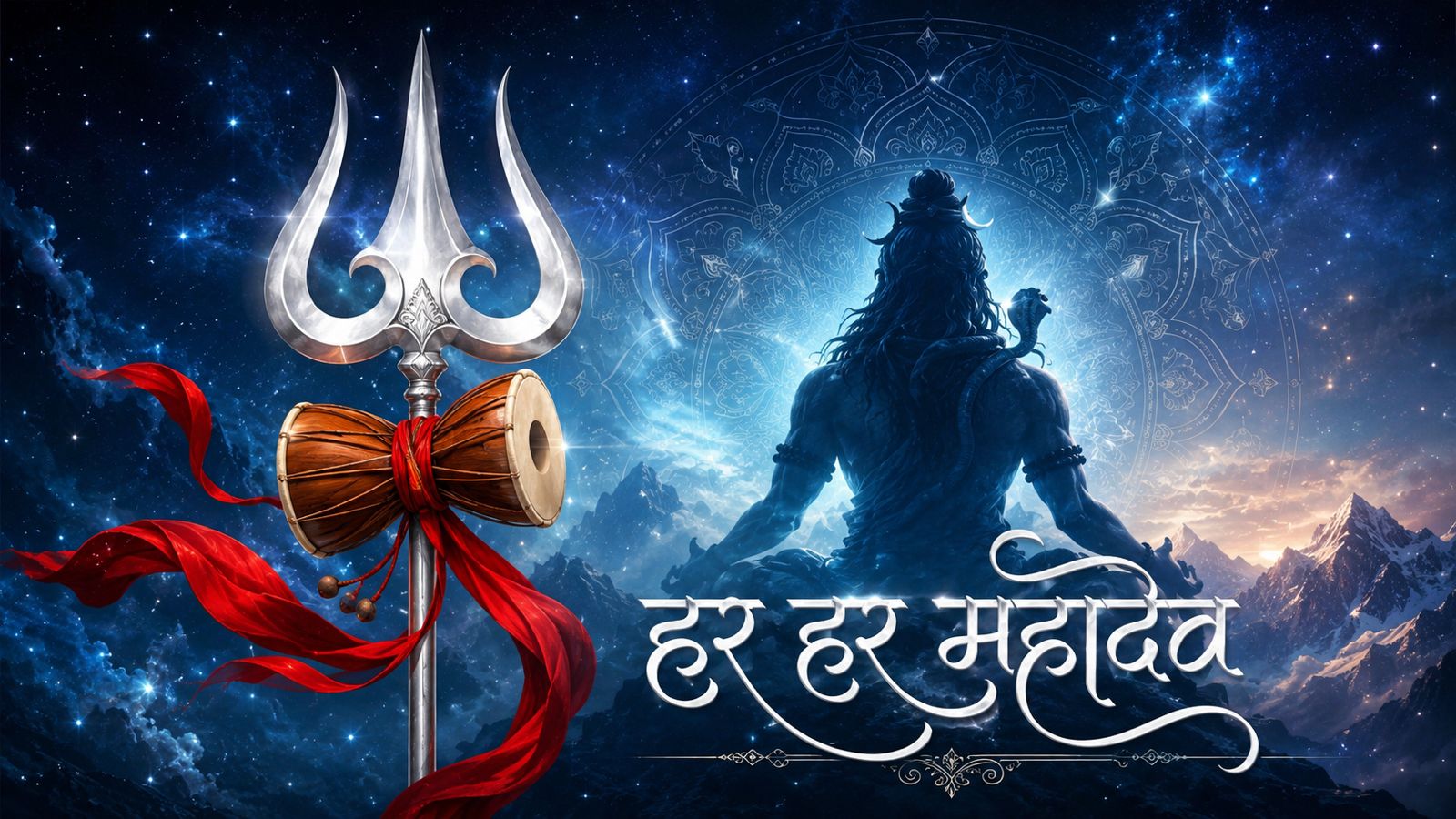
The Sacred Trishul: Why Mahadev Never Lets It Go
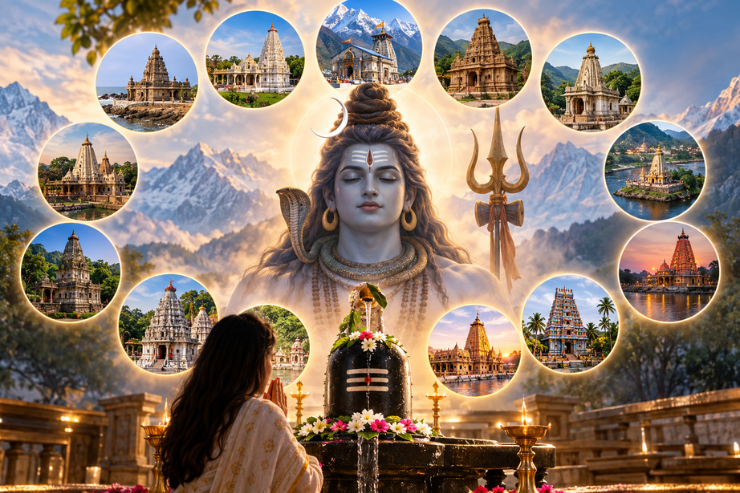
There is something deeply arresting about the image of Lord Shiva — still, serene, eyes half-closed in eternal meditation, and in his hand, a three-pronged weapon that seems to hold the entire universe in balance. The Trishul is not merely a weapon. It is a scripture written in form. Every prong, every angle, every association carries a meaning that has been contemplated by sages, scholars, and devoted souls for thousands of years.
If you have ever stood before a Shivalinga at a temple in Brampton or anywhere else in the world and wondered what the Trishul truly represents, this is the answer you have been looking for.
The Origin: Where Did the Trishul Come From?
The story of the Trishul's origin is found in the Vishnu Purana, one of the most revered of the eighteen Mahapuranas.
Surya Dev, the Sun God, was married to Sanjana, the daughter of Vishwakarma — the divine architect of the gods. Unable to endure her husband's intense solar radiance, Sanjana approached her father for help. Vishwakarma reduced Surya Dev's brilliance by one-eighth, and the energy that was shaved away fell to the earth as a blazing mass of divine light.
Vishwakarma collected that sacred energy and, with his celestial craftsmanship, forged three powerful weapons — the Trishul for Lord Shiva, the Sudarshana Chakra for Lord Vishnu, and the Pushpaka Vimana, the divine chariot.
The Trishul, therefore, is not made of iron or stone. It is made of the Sun's own radiance. It carries within it the power of cosmic fire.
The Three Prongs: Layers of Symbolism
What makes the Trishul extraordinary is that each of its three prongs holds multiple layers of meaning. Sages have interpreted them across different dimensions of existence.
1. The Three Gunas
- Sattva — purity, clarity, wisdom
- Rajas — action, passion, movement
- Tamas — inertia, darkness, dissolution
The three gunas govern all matter and all beings. By holding the Trishul, Mahadev declares mastery over all three — not as a tyrant, but as the supreme consciousness that transcends yet sustains them all.
2. The Three Worlds
- Swarga Loka — the celestial realm
- Bhu Loka — the earthly plane
- Patala Loka — the netherworld
The Trishul represents Shiva's sovereignty across all three dimensions of existence. His authority is not limited to one world. It extends across the entire cosmos.
3. The Three Aspects of Time
- Past (Bhuta)
- Present (Vartamana)
- Future (Aagami)
Lord Shiva is Trikalagya — the one who knows all three dimensions of time. The Trishul embodies this infinite awareness, reminding the devotee that the divine exists beyond the boundaries of yesterday, today, and tomorrow.
4. The Three States of Consciousness
- Waking (Jagrat)
- Dreaming (Swapna)
- Deep sleep (Sushupti)
The Trishul symbolizes Shiva's presence across all states of human consciousness — and beyond all of them, into the fourth state, Turiya, the pure awareness that is his true nature.
The Trishul as a Weapon: The Destruction of Evil
Beyond philosophy, the Trishul is also a weapon — and a formidable one. Hindu scriptures describe it as the destroyer of the three forms of pain that afflict every soul:
- Adhyatmika — suffering arising from within, including illness, grief, and mental anguish
- Adhibhautika — suffering caused by other beings
- Adhidaivika — suffering caused by natural forces and fate
When Mahadev wields the Trishul in battle, he is not merely fighting enemies. He is dissolving the root causes of suffering itself. This is why Shiva is the compassionate destroyer — because true compassion sometimes means burning away what binds us.
The Damru and the Trishul: A Sacred Pairing
The Trishul is almost always depicted alongside the Damru — the small double-sided drum that rests at its shaft.
This pairing is deeply intentional. The Trishul represents the power of dissolution. The Damru represents the power of creation — its rhythmic beats are said to have given birth to the Sanskrit language itself. Together, they express the complete cosmic cycle: what Shiva destroys, his sound recreates.
In the form of Nataraja, Shiva dances to the Damru's beat, and this dance sustains the rhythm of the universe.
Why Devotees Offer a Trishul at the Temple
Across India and in every Hindu mandir in Brampton and beyond, devotees offer a Trishul to Lord Shiva as an act of surrender. The gesture carries profound meaning — it is the devotee saying: I lay down my ego, my desires, and my fears at your feet. I trust in your cosmic order.
Planting a Trishul in the ground near a Shivalinga is also a way of invoking divine protection over that sacred space.
What the Trishul Teaches Us Today
The Trishul is more than mythology. It is a mirror.
Each prong points to something within us — the pull of desire, the weight of inertia, and the yearning for clarity. Together, they ask a question every spiritual seeker must answer: Can I hold all three in balance, without being consumed by any one of them?
This is the inner teaching of the Trishul. Not power for its own sake. Balance. Awareness. The courage to rise above what binds you.
Experience the Devotion in Person
Understanding the Trishul intellectually is one thing. Feeling its presence in a sacred space is another.
Shri Gauri Shankar Mandir — the trusted Hindu mandir in Brampton — has been a spiritual home for the community since 2006, where every ritual is performed with scriptural authenticity and heartfelt devotion. Whether you wish to attend the Shiv Rudrabhishek, offer your prayers at the Shivalinga, or seek the divine from wherever you are, the mandir makes it seamless through online pooja booking.
Frequently Asked Questions
Q1. What do the three prongs of Shiva's Trishul represent?
The three prongs carry multiple layers of symbolism. Most commonly, they represent the three gunas — Sattva, Rajas, and Tamas — as well as the three worlds (Swarga, Bhu, and Patala Loka), the three dimensions of time (past, present, future), and the three states of human consciousness. Each layer reveals a different dimension of Shiva's cosmic authority.
Q2. Who made the Trishul for Lord Shiva?
According to the Vishnu Purana, the Trishul was crafted by Vishwakarma, the divine architect of the gods. He forged it from the solar energy shaved off from Surya Dev's radiance and presented it to Lord Shiva as a divine weapon.
Q3. Can the Trishul be stopped once Shiva releases it?
Hindu scriptures describe the Trishul as unstoppable once released. It is believed that no force in any of the three worlds can halt it — only Lord Shiva himself can recall it. This underscores its nature as an instrument of divine will rather than human power.
Q4. Is it auspicious to keep a Trishul at home?
Yes, keeping a Trishul — especially alongside a Damru or Shivalinga — is considered sacred and auspicious. It is believed to invite Lord Shiva's protection into the home and serves as a powerful symbol of divine energy and cosmic balance.
Q5. Why is the Trishul always shown with a Damru?
The Damru and the Trishul together represent the complete cosmic cycle. The Trishul symbolizes dissolution — the end of what must end. The Damru symbolizes creation and sound, the origin of all existence. Together, they reflect Shiva's dual role as both destroyer and creator, two expressions of the same sacred truth.