Satyanarayan Katha: The Puja That Honours Every New Beginning
Some moments feel too big for a party and too personal for a post. Be it a new home, a new job, a baby, or a business finally taking shape after years of quiet effort.
And you want to mark it with something that lasts longer than a photograph. You realize that this moment deserves to be placed in front of God before it is placed on social media.
For generations, Hindu families have held Satyanarayan puja at the threshold of every meaningful new chapter. Not because tradition demands it. But because gratitude, when offered sincerely, transforms a milestone into something sacred.
If you have heard of it but never fully understood what it involves, and why it matters, then this blog is for you.
About Satyanarayan Katha
Satyanarayan Katha is a puja dedicated to Lord Vishnu in his form as Satyanarayan, the Lord of Truth.
"Satya" means truth. "Narayan" is another name for Lord Vishnu. The Katha, meaning story, is a series of five sacred narratives from the Skanda Purana that describe how devotees across different walks of life received blessings after performing this puja with sincerity.
It is not a puja of desperation. It is a puja of gratitude and devotion.
It says: something good has come into my life, and before I move forward, I want to offer thanks.
When Do Families Perform Satyanarayan Katha?
This is one of the most versatile pujas in Hindu tradition. It is performed across a wide range of life events because the intention behind it is gratitude and seeking continued blessing that fits every new beginning.
| Life Event | Why Satyanarayan Katha Is Performed |
| House warming (Griha Pravesh) | To invite divine blessings into the new home before settling in |
| New business launch | To seek Lord Vishnu's grace for prosperity and honest success |
| Job promotion or new job | To express gratitude and seek continued guidance |
| Birth of a child | To offer thanks for the blessing of new life |
| Marriage or anniversary | To seek blessings for a harmonious and devoted union |
| Academic achievement | To thank God before stepping into the next phase |
| Recovery from illness | To express gratitude for health restored |
| Completion of a long journey or project | To close one chapter with grace before opening the next |
No milestone is too small to be offered back to God with gratitude. Every moment worth remembering is worth beginning with a prayer. If it is worth celebrating, it is worth consecrating.
What Happens During the Katha?
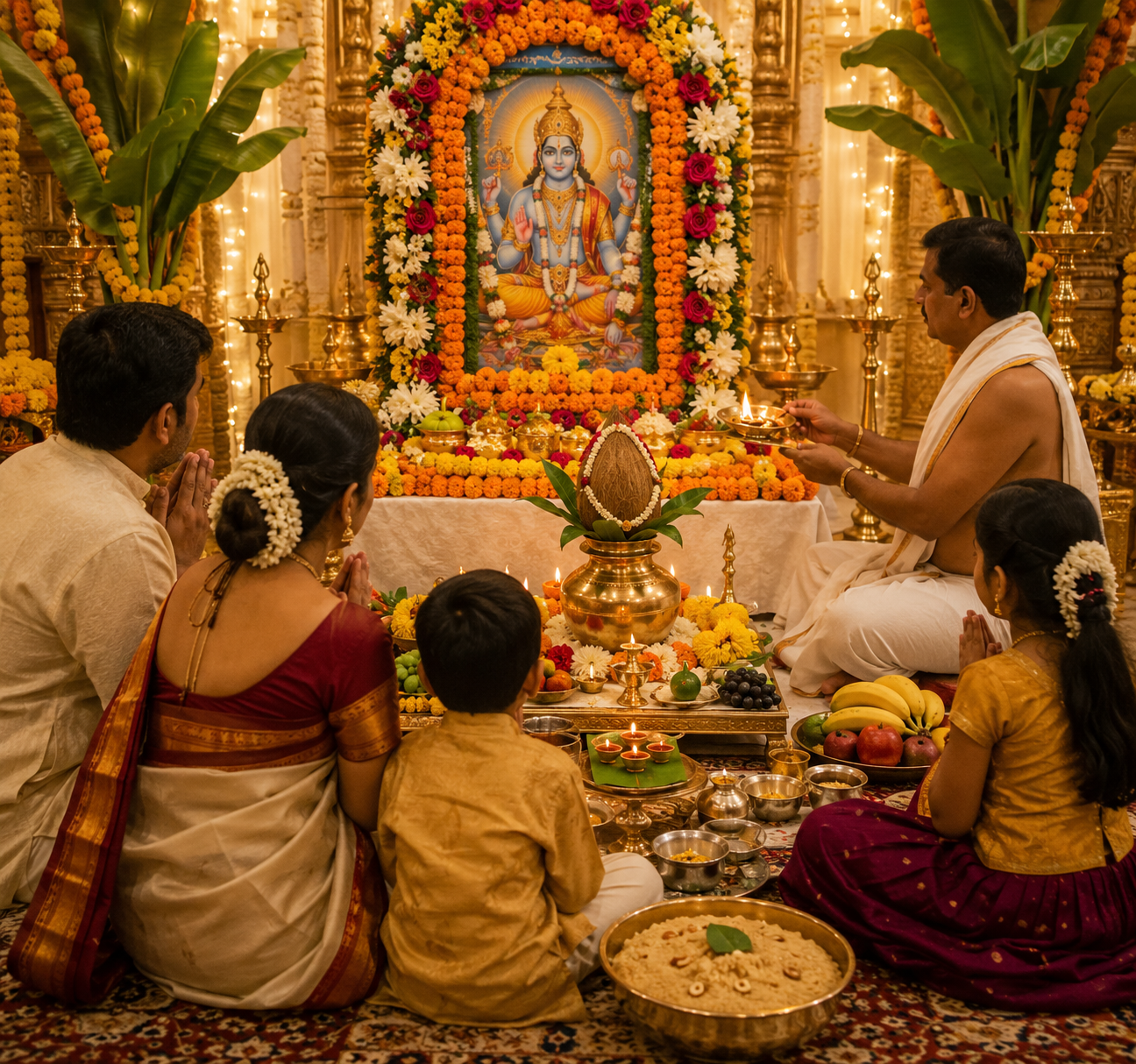
The puja typically unfolds in a clear, structured sequence. Here is what to expect:
- Sankalp: The family gathers and a sankalp, a sacred vow of intention, is taken in the presence of the priest. You state your name, your purpose, and your gratitude.
- Ganesh Puja: Lord Ganesha is worshipped first, as is done at the beginning of every sacred ritual.
- Kalash Sthapana: A sacred water pot is established, representing the presence of all divine energies.
- Vishnu Puja and Abhishek: Lord Satyanarayan is worshipped with flowers, tulsi, panchamrit, and other offerings.
- The Five Kathas: The priest narrates the five stories from scripture, each describing a devotee who received divine grace through this puja. The family listens with full attention.
- Aarti: The puja closes with aarti and the sharing of prasad, usually panchamrit and sheera, a warm, sweet preparation of semolina, ghee, milk, and banana that is distributed among everyone present.
Depending on the size of the gathering, the full ritual runs anywhere between one and two hours.
What Does the Family Need to Prepare?
Here is a standard samagri list for Satyanarayan Katha:
- Yellow cloth for the altar
- Idol or image of Lord Vishnu or Satyanarayan
- Kalash with water, mango leaves, and a coconut
- Panchamrit (milk, curd, honey, ghee, sugar)
- Tulsi leaves
- Yellow flowers and garlands
- Incense sticks and a diya with ghee or oil
- Fruits, especially banana
- Ingredients for sheera: semolina, milk, ghee, sugar, banana
- Betel leaves and nuts
- Sendha namak for certain rituals
- Dakshina for the priest
Families performing the Katha at the Hindu mandir in Brampton receive guidance on what to carry and what the temple arranges on their behalf, making the preparation far less overwhelming. This removes much of the preparation stress, especially for families who are unfamiliar with the full samagri list.
Can Satyanarayan Katha Be Performed at Home or Only at the Temple?
Both are completely valid.
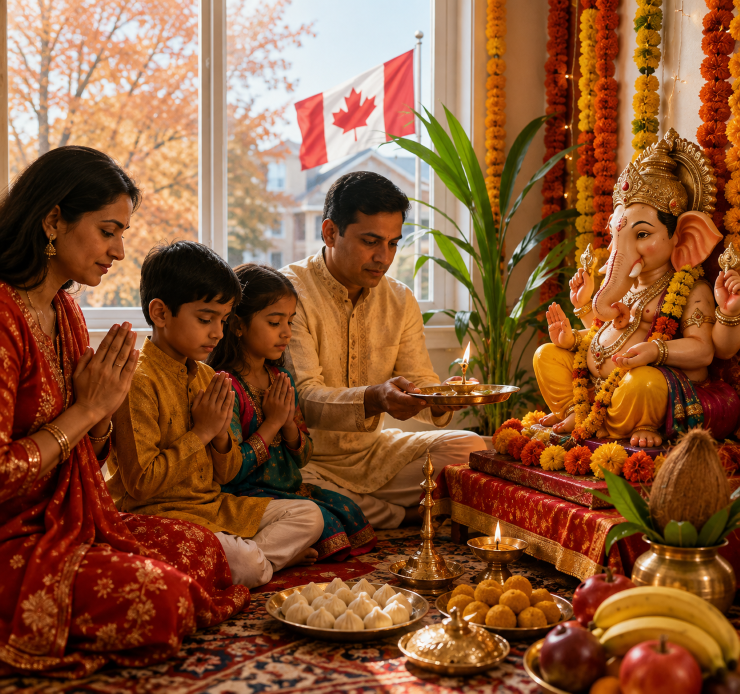
- At home: Ideal for intimate gatherings. You invite a priest, prepare the space in your living room or puja room, and the Katha is performed with your close family and friends around you. It brings the sacred directly into the space you are celebrating.
- At the temple: Ideal when you want the added energy of a sacred space and experienced priests. Performing Satyanarayan Katha at a Hindu temple in Brampton means the priests handle the ritual structure completely. You arrive with your family and your gratitude. Everything else is taken care of.
Many families choose the temple when the milestone is particularly significant or when they want the occasion to feel larger and more communal.
Why This Puja Feels Different From Other Celebrations
Satyanarayan Katha gives meaning to the milestone.
When you sit in front of the deity with your family, when the priest chants the mantras and the stories are recited, something shifts. The achievement is no longer just yours. The achievement finds its rightful place, at the feet of God. Gratitude stops being a passing emotion and becomes something you can actually offer.
Families who have observed this puja consistently describe the same experience. The milestone feels completed. Not just celebrated, but closed with grace and opened with blessing.
That is something no party can give you.
Every Blessing Deserves to Be Acknowledged
Every new home, every new beginning, every blessing received deserves to be acknowledged with intention. Not just marked on a calendar, but offered back to God with a grateful heart.
That is what this puja has always been. A moment of stillness in the middle of everything moving.
Satyanarayan Katha is a practice of remembering what truly matters. Of choosing meaning over momentum. Of letting gratitude lead before anything else does.
If you are looking to hold a Satyanarayan Katha for your family's next milestone, Shri Gauri Shankar Mandir offers Satyanarayan Katha performed by experienced priests who guide your family through every step with care. You can arrange your puja through online puja booking on the temple website. Booking a few days in advance is helpful, especially around auspicious dates and weekends.
Frequently Asked Questions
Q1. What is the best day to perform Satyanarayan Katha?
Traditionally, Purnima, the full moon day, is considered the most auspicious day for Satyanarayan Katha. However, it can be performed on any auspicious day, ekadashi, during festivals, or on a day that holds personal significance for the family. A priest can help you choose the right muhurat.
Q2. How long does Satyanarayan Katha take?
The puja typically takes between one and two hours. This includes the Ganesh puja, the main ritual, the narration of the five kathas, aarti, and prasad distribution. The duration may vary slightly depending on the priest and the scale of the gathering.
Q3. Can Satyanarayan Katha be performed after a death in the family?
It is generally advised to wait for the period of mourning, typically thirteen days, to pass before performing auspicious pujas like Satyanarayan Katha. A priest can provide specific guidance based on your family tradition and the circumstances.
Q4. What is the prasad for Satyanarayan Katha and why is it important?
The traditional prasad is sheera, a sweet made from semolina, milk, ghee, sugar, and banana. It is considered sacred and must be received and consumed with respect. According to the Katha's scriptures, disrespecting the prasad is said to invite difficulty, while receiving it with devotion brings continued blessings.
Q5. Can people of other faiths attend Satyanarayan Katha?
Yes. Satyanarayan Katha is a deeply welcoming ritual. Friends, neighbours, and colleagues of any background are welcome to attend, sit respectfully, and receive prasad. Many families use it as an occasion to bring their community together, regardless of faith.